Dalton Greyjoy
Fire & BloodDalton Greyjoy, the Red Kraken, was Lord Reaper of Pyke and an ambitious ironborn raider whose changing alliances and attacks continued to shape the war even after the Dance of the Dragons had formally ended. He gained wealth and territory through raids, ignored the Iron Throne’s attempts to restrain him, and died on the eve of a major confrontation with Alyn Velaryon. His death exposed how dependent his conquests were on his personal authority: his fleet dissolved, his succession was disputed, and Fair Isle’s inhabitants rose against the remaining ironborn.
Lord Reaper and a Sought-After Ally
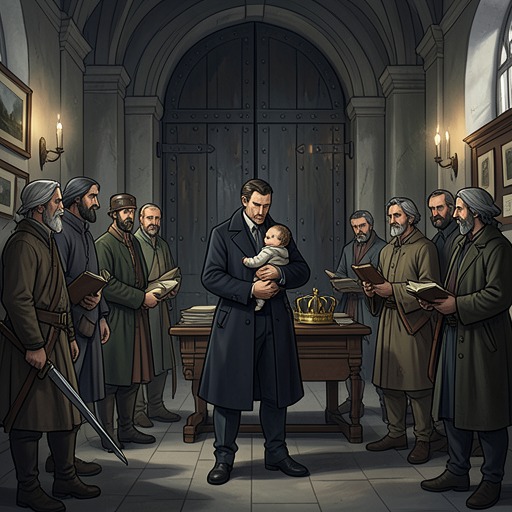
Dalton was only sixteen when Ser Otto Hightower sought his support for Aegon II. Otto offered him the office of admiral and a place on the council in return for his allegiance. The offer reflected the military value of the Iron Islands, but also the young lord’s reputation: he was daring, bloodthirsty, and drawn to battle. In the later struggle, Daemon Targaryen judged that Dalton might instead be persuaded to support Rhaenyra, despite the expectation that Aegon would seek the ironborn alliance. In Daemon’s assessment, their loyalty was notoriously uncertain, and Dalton’s appetite for fighting made him open to courtship by either claimant.
Dalton ultimately chose the Greens’ opponents, but his support was not a settled political commitment. His actions show him treating the war as an opportunity for independent raiding rather than as an obligation to either side. The distinction became explicit after the fighting at the Gods Eye, when his longships attacked the Westerlands while the Lannister forces were engaged elsewhere. He had been courted by both claimants, but the wealth and captives taken in his raids served his own power more directly than the interests of the side he had joined.
Raids in the Westerlands and Fair Isle
While Lord Jason Lannister’s army fought on the Red Fork, Dalton’s fleet descended on the Lannister coast. Lady Johanna had barred Casterly Rock against him, so the ironborn seized three-quarters of the ships in Lannisport’s harbor, sank the rest, and sacked the city. Their plunder included more than six hundred women and girls, among them Lord Jason’s mistress and natural daughters. The attack struck the Westerlands while its military forces were committed elsewhere and demonstrated the vulnerability of its coastal holdings even when its principal castle could not be taken.
Dalton also attacked Fair Isle. Lord Farman sheltered behind his walls while sending requests for help that went unanswered; eventually Faircastle fell, ending the island’s organized resistance. Dalton took four of Lord Farman’s daughters as salt wives and gave a fifth to his brother Veron. Lord Farman and his sons were ransomed back to Casterly Rock for their weight in silver. His treatment of Fair Isle’s people and its ruling family was part of a wider pattern of raiding in which the spoils included both wealth and women taken from the conquered west.
His attacks continued after the Dance, during the first three years of Aegon III’s reign. Although Dalton had been a useful ally to the blacks during the conflict, peace did not make him an ally of the Iron Throne. He paid little heed to royal commands to end his raids, restore the women his men had taken, or return Fair Isle to its former lords. He invoked the Drowned God to deny that the Iron Throne could dissolve the bonds between him and his salt wives, and mocked the demand that Fair Isle be restored. His conduct made the limits of the young king’s authority plain: Dalton’s allegiance during wartime had not brought his actions under royal control.
When Lady Johanna tried to build a fleet to carry the fight to the ironborn, Dalton attacked her shipyards and burned them, taking another hundred women. He answered her protest by claiming that women of the west preferred ironborn men to their Lannister protectors. The boast turned the language of conquest into a taunt against the people whose lands and families he had raided. Johanna later assembled fishing boats and cogs at Feastfires for an attempt to retake Fair Isle. The expedition, carrying a hundred knights and three thousand men-at-arms, was betrayed before it could land; Dalton’s longships were waiting, and he sent the heads of its commanders to Casterly Rock. He described the killings as payment for his uncle, while also disparaging the dead man. The attack further prolonged the western war rather than securing a lasting settlement.
Ambition, Succession, and the Coming Fleet
By 133 AC, Dalton was preparing to meet Alyn Velaryon, whose fleet was approaching. He had gathered hundreds of longships near Fair Isle, Feastfires, Kayce, and Lannisport. His ambitions extended well beyond defending his existing holdings: he spoke of taking his fleet along Alyn’s route, raising his banner over the Shield Islands, sacking Oldtown and Sunspear, and claiming Driftmark. He also contemplated taking Lady Baela Targaryen as a salt wife. These plans place his ambition in sharp contrast with the unstable position of his own succession: his power at sea was formidable, but his heirs were young and his household offered no straightforward means of preserving his conquests.
Dalton had never taken a rock wife. He had two sons by salt wives on Pyke, as well as three sisters and several ambitious cousins. By law, the Seastone Chair passed to his eldest salt son, Toron, who was not yet six. Toron’s mother, as a salt wife, could not expect to serve as regent in the way a rock wife might. Dalton’s raiding had accumulated territory and wealth, but he had not established a secure succession capable of holding them together. Even before his death, the assembled captains had reason to anticipate a struggle for power after his rule.
Tess and the Collapse of His Power
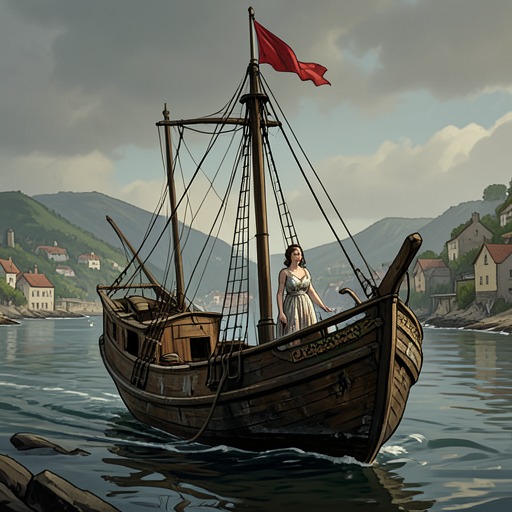
Among Dalton’s salt wives was Tess, whose background and circumstances remain uncertain in the historical accounts. What is firmly reported is that, on a rainy night at Faircastle, she took Dalton’s dagger while he slept and killed him. She then threw herself into the sea. His end came not in the battle for which he had gathered his fleet, but within his own household, by the hand of one of the women he had taken as a wife. The stark reversal makes his domestic power inseparable from the violence of his conquests, without resolving what Tess felt or why she acted: the accounts do not establish those details.
Dalton’s death came on the eve of his greatest battle and immediately unsettled the force he had assembled. As word spread, captains began leaving for home rather than confronting Alyn Velaryon under a new command. On Fair Isle, smallfolk and surviving knights rose against the ironborn who remained. They attacked the raiders and their ships, and within three days hundreds of ironmen had been killed; only Faircastle remained in ironborn hands. The garrison, made up largely of Dalton’s close companions and brothers-in-battle, continued to hold out. Its internal order was itself fragile: Alester Wynch and Gunthor Goodbrother quarreled over Lysa, one of the salt widows, and Gunthor killed Alester. Dalton’s death thus ended neither the contest for Fair Isle nor its violence, but it deprived the ironborn of the leader around whom their wider campaign had been organized.
Character and Narrative Significance
Dalton’s career is marked by a consistent disparity between the reach of his ambitions and the durability of his rule. He could gather hundreds of longships, devastate coastal towns, and threaten distant targets, yet the fleet’s rapid dispersal after his death shows how little of that power had been secured beyond his own command. His disregard for royal orders likewise presents the Iron Throne as unable to convert wartime alliance into obedience when a regional lord possessed the ships and force to defy it.
The narrative also places Dalton’s boasts beside the costs of his rule. His plans to enlarge his dominion and his casual confidence in taking more salt wives stand against the raids, captivity, ransom, and revolt that give those ambitions their consequences. Tess’s killing of him reverses the expected shape of his final contest: the assembled fleets do not decide his fate, and the ruler who treated women as spoils is killed by a member of his own household. The history leaves Tess’s life largely unknown, but makes the political aftermath unmistakable. Once Dalton is gone, captains abandon his plans, his heirs face an uncertain regency, and the people he had conquered begin to fight back.